2009-12-07

Stair Dismount Update

SD_loosebindings

Stair Dismount™ for iPhone and iPod touch is soon getting a v1.2.0 update. It has already been submitted to Apple for approval to the App Store. There will be quite many updates:

  • OpenFeint for online leaderboards
  • three new scenarios
  • game remembers last used scenario and face
  • quick start button in main menu to start game immediately
  • iPod music library support
  • panorama camera for better overview of scenarios
  • many other small fixes here and there.

Go check out www.stairdismount.com or click here to go straight to iTunes page.

And here’s also a bunch of media coverage links about the game:
148Apps, appadvice, Know your mobile, Gizmodo, iPhoneGames360, The Appera, Finger Gaming, Best iPhone Apps. Many blogs and twitter posts have been mentioning the game as well, here’s links to a few blog posts: crinthecity, spill out the glass of water, This is Your Amiga Speaking. Additionally SlideToPlay posted a nice Youtube video, plus PocketGamer and TouchGen podcasts talked about the game as well. Thanks everybody!

2009-11-25

New Stair Dismount Released!

Stair Dismount™ for iPhone and iPod touch is now released (25 Nov 2009) – sooner than we originally anticipated!

The press also seems to like the new version, as already reported by Gizmodo, Touch Arcade, App Advice, TUAW, iTunesGames and The APPera.

Go check out www.stairdismount.com and click the gray App Store badge on the right to get the game. :-)

Also I’m very surprised to see that Game Developer Magazine made “The Game Developer 50″ article listing 50 individuals with some amount of significant work, and they actually included me as one of those! While the article correctly cites me as part of the team making first licensable mobile 3D engine (referring to X-Forge), and referring to Stair Dismount now working on iPhone … there’s an error in the info about Zen Bound. I hate taking credit for someone elses work so I have an important correction: Zen Bound has been almost solely coded by Mikko Mononen (a.k.a. Memon), including the rope simulation code which the article talked about.

2009-11-19

Introduction video for new Stair Dismount

Continuing with the theme from my previous post, here’s the first introductory video for the new Stair Dismount for iPhone and iPod touch.

Youtube link: http://www.youtube.com/watch?v=tAeTxPINttw

2009-11-17

Stair Dismount iPhone/iPod touch

Stair Dismount screenshot
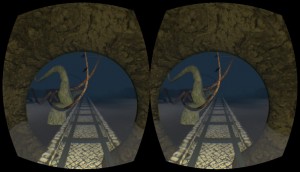
Me and few others have recently posted some “Dismount Moments” photos to Facebook, as seen here for an example. These images originate from the all-new Stair Dismount, created for iPhone and iPod touch. It is of course a direct successor to the original Stair Dismount released in 2002. The game has been submitted for Apple’s approval to the App Store, so it should be available for purchasing quite soon (just a few weeks). Here’s a short introduction of what the new game is all about…
Read the rest of this entry »

2009-11-10

Code: Tokenizer

Here’s a little C++ utility class for splitting C strings into tokens by given separators. It’s inspired by “tokenwad” taken from Sol’s CFL3, which I have used quite a few times. This version has low memory overhead as it performs only 1-2 allocations (depending if the tokenization is done in-place or a separate copy is needed).

Read the rest of this entry »

2009-11-09

Twittering

So, my Twitter account is jlauha. I configured the blog posts to be automatically updated there, so that’s one way to follow my stuff if you’re into that. We’ll see if I start occasionally posting something else as well.

Tool: Binary data to embeddable char array

Sometimes there’s a need to embed some little bit of binary data in the executable. The reasons may vary – perhaps it is for a resource you want to exist even if data files are missing, or it could be even something you want to “hide” from some curious wannabe-hackers.

In the past years my typical use case was as follows. I used to make “64 KB intros” (such as this one), and for those I needed to embed a few data files to the executable as object data, so that I could exploit compression of the executable packer without writing a proper compression tool myself (such as UPX).

Read the rest of this entry »

2009-10-17

Tool: pngprep

When programming visuals, I often need to fix color values of pixels in image data where alpha is 0. Here’s a little tool called pngprep which can do some pre-processing of image data and save the result as a 32 bpp png file.
Read the rest of this entry »

2009-10-16

Tool update: psdslayer 1.1

A while ago I posted psdlayerstga 1.0. I have now updated it to support saving to PNG files, which is also now the default output format. The tool also got renamed to psdslayer, since I was constantly imagining, and even mistyping, the name to be “psd slayer” rather than “psd layers“. And I find it funny.
Read the rest of this entry »

2009-10-11

Steps and Pulses

A few years ago I read the book Texturing and Modeling: A Procedural Approach (Ebert et al.) and found some low level “step” and “pulse” primitives used for generating procedural graphics. It didn’t take a long time to notice that those are actually really useful in many other situations as well.

A generic pattern is that some value changes its value from a to b over t iterations, and you want something other to move along from c to d in the same time. Implementation is easier when the transition from a to b is just normalized to [0..1]. After that it’s really easy to map it to any range just by another multiplication (dc) and adding an offset (c).

The “boxStep” function does the normalization part described above. However, just linear movement is actually quite boring, so the funky part here is that you can just switch “boxStep” to a “smoothStep” and there we go, movement along a smooth curve which feels better. Or you can map the boxStep result to a different function which takes in a value in the [0..1] range and outputs a value in the same range, e.g. sqrt().

Read the rest of this entry »